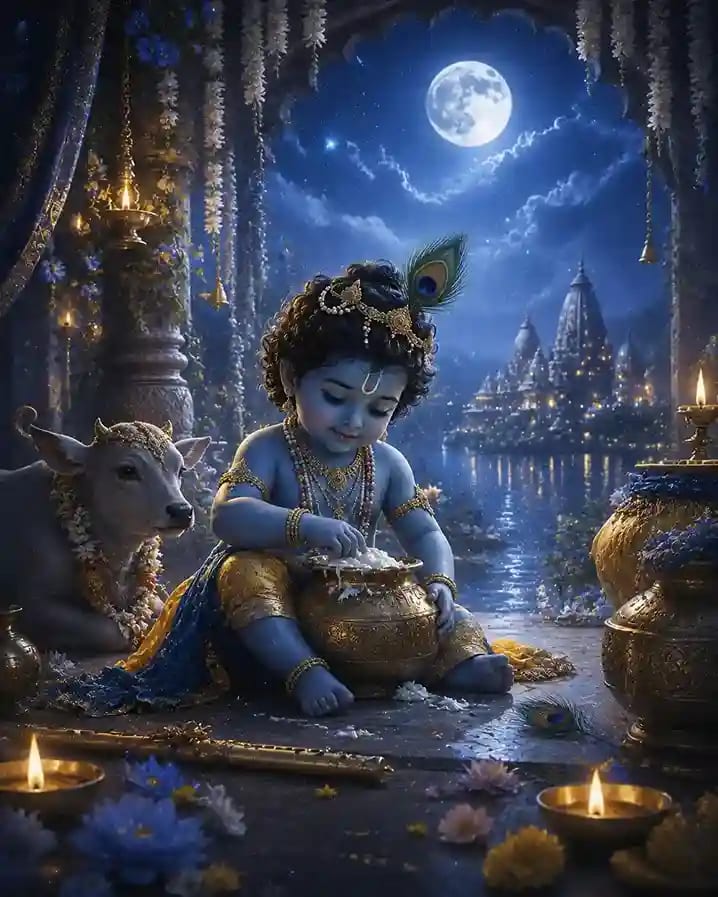
Janmashtami is one of the most widely celebrated Hindu festivals, commemorating the birth of Lord Krishna, the eighth incarnation (Avatar) of Lord Vishnu. It falls on the Ashtami (eighth day) of the Krishna Paksha in the month of Bhadrapada, which usually corresponds to August or September in the Gregorian calendar. The festival is marked by fasting, devotional singing, dramatic reenactments of Krishna's life (Raslila), and the joyful breaking of the fast at midnight, the believed hour of Krishna's birth.
Lord Krishna was born in a prison cell in Mathura to Devaki and Vasudeva, while his maternal uncle, the tyrannical King Kansa, ruled the kingdom. To protect the divine infant from Kansa, Vasudeva carried him across the Yamuna River to Gokul, where he was raised by Yashoda and Nanda. Krishna's childhood in Gokul and Vrindavan, filled with miraculous feats, divine play (Leela), and enchanting flute music, forms the heart of Janmashtami celebrations.
The festival is celebrated with immense enthusiasm across India and the world. In Mathura and Vrindavan, the celebrations are especially grand, with temples decorated elaborately and devotees observing strict fasts. In Maharashtra, the Dahi Handi tradition involves teams of young men forming human pyramids to break a pot of curd hung high above the ground, reenacting Krishna's love for butter and curd. Janmashtami symbolizes the triumph of divine love, righteousness, and joy over oppression and darkness.