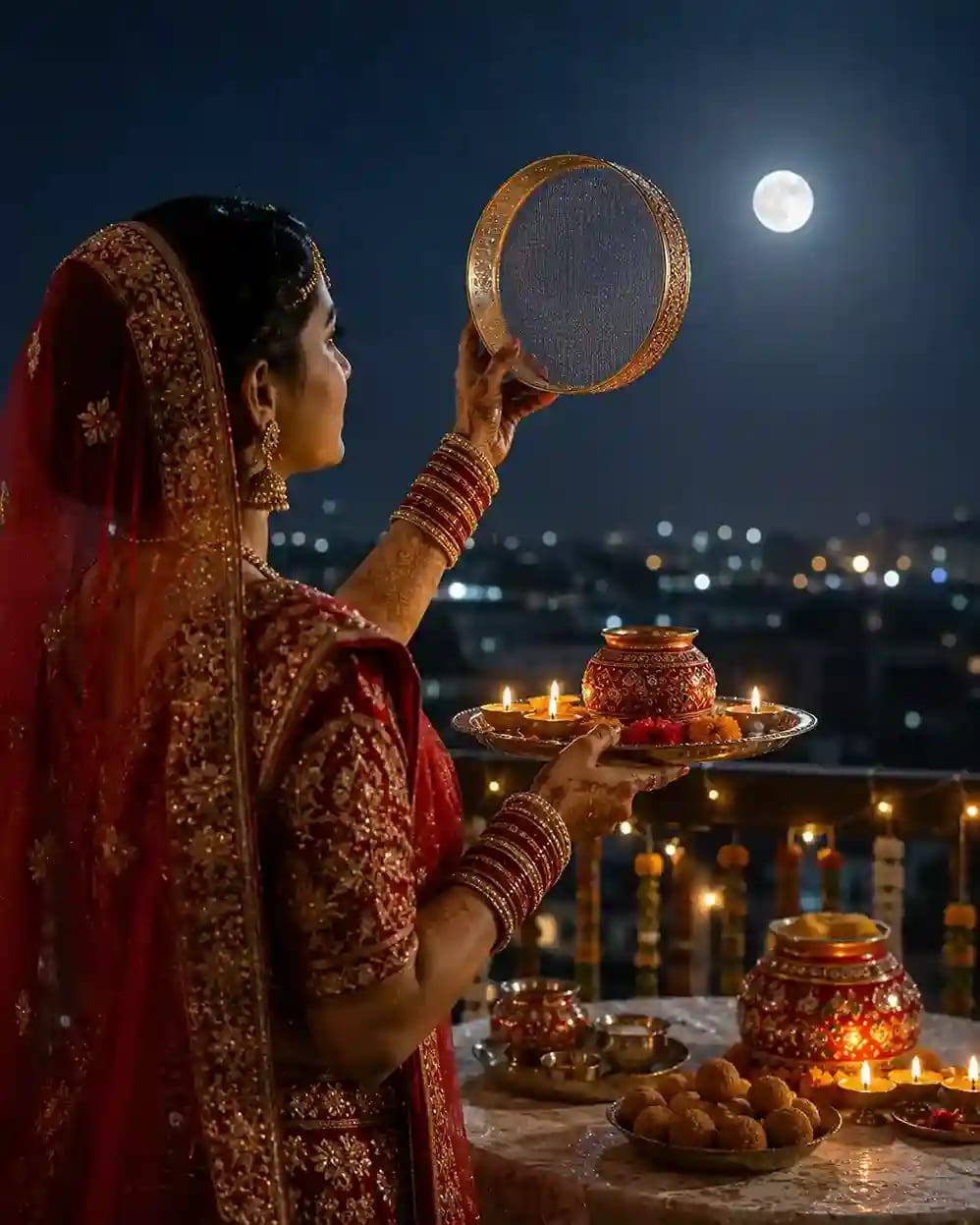
Karwa Chauth is one of the most widely observed fasting festivals among married Hindu women in North India, particularly in Uttar Pradesh, Rajasthan, Haryana, Punjab, and Madhya Pradesh. It falls on the Chaturthi (fourth day) of the Krishna Paksha in the month of Kartika. On this day, married women observe a strict Nirjala fast from sunrise to moonrise, praying for the longevity, prosperity, and well-being of their husbands. Unmarried women also observe the fast in some regions, praying for a loving and suitable life partner.
The word 'Karwa' refers to a small earthen pot with a spout, symbolizing prosperity and the source of life, while 'Chauth' means the fourth day. The festival is rich in rituals, including the pre-dawn meal (Sargi) given by the mother-in-law, the application of intricate henna designs, the wearing of bridal attire, and the evening gathering of women for the Katha (story) and songs. The fast is broken only after sighting the moon and offering Arghya through a sieve, through which the husband's face is first viewed.
The origins of Karwa Chauth are linked to several legends, the most popular being the story of Queen Veeravati, whose devotion and the intercession of Goddess Gaura brought her husband back from the brink of death. Another legend associates the festival with the epic Mahabharata, where Draupadi observed the fast at the behest of Lord Krishna. Today, Karwa Chauth is celebrated with great enthusiasm, blending deep tradition with modern expressions of love and commitment.